


Iwo Jima Memorial
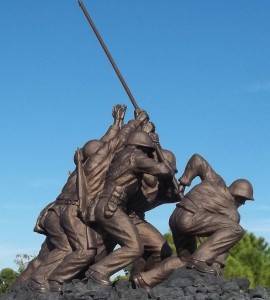
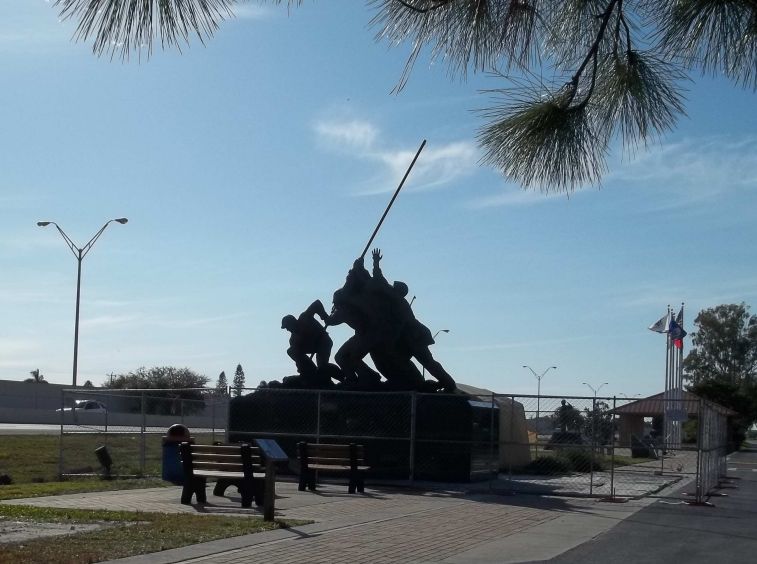
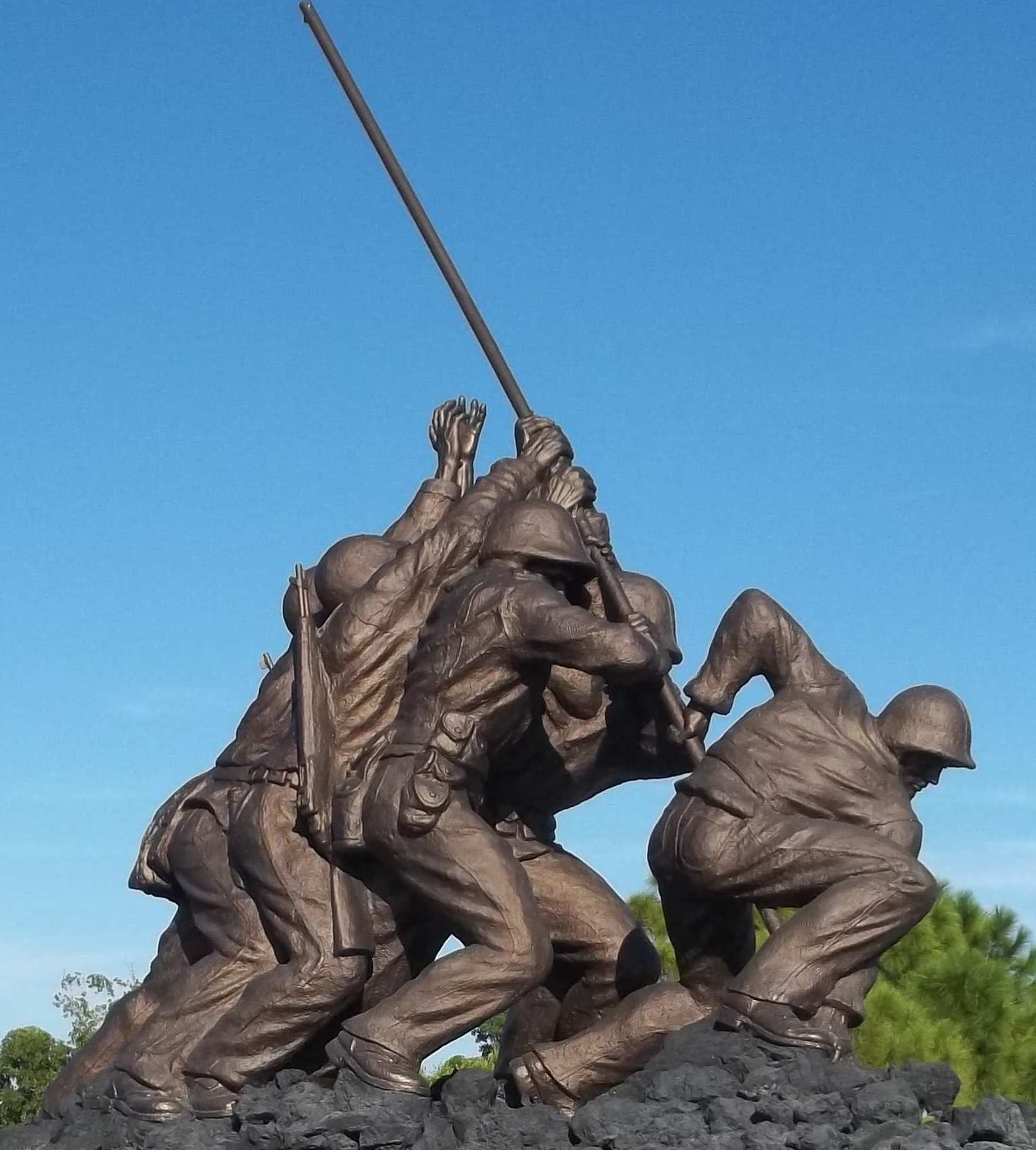
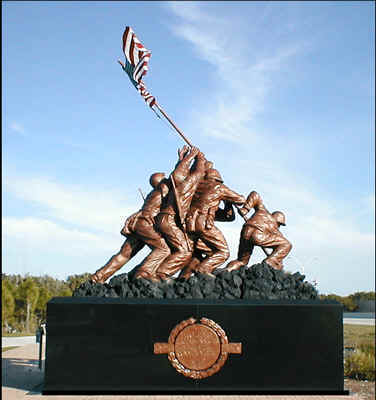 As commuters cross the Midpoint Memorial Bridge connecting Fort Myers to Cape Coral, they are greeted by the site of a 20-foot statue depicting five Marines and a Navy hospital corpsman raising the American flag on 560-foot Mount Suribachi, the highest point on Iwo Jima, a small island located 660 miles south of Tokyo. Many think that it is a replica of the 60-foot-tall Iwo Jima Memorial near Arlington National Cemetary in Virginia, but it is, in fact, one of three originals that were created by a sculptor by the name of Felix de Weldon.
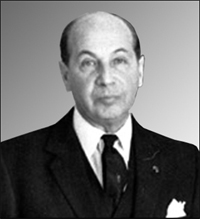 De Weldon was inspired to sculpt the memorial after seeing AP photographer Joe Rosenthal’s Pulitizer Prize-winning picture of the actual flag raising that took place on February 19, 1945. “The photograph came in to the War Department on a Thursday,” relates North Fort Myers sculptor Don Wilkins, who has helped restore the Cape Coral monument on several occasions (see below). “De Weldon immediately saw in the photo a sculpture, and he started a model of the statue the next day. He finished it on Monday and showed it to [then
  Vice-President] Harry S. Truman on Wednesday.” That mock-up (known as a maquette) eventually won him a commission to create the 60-bronze that has stood just outside the Arlington National Cemetery on the southern shores of the Potomac River since its installation in September of 1954.
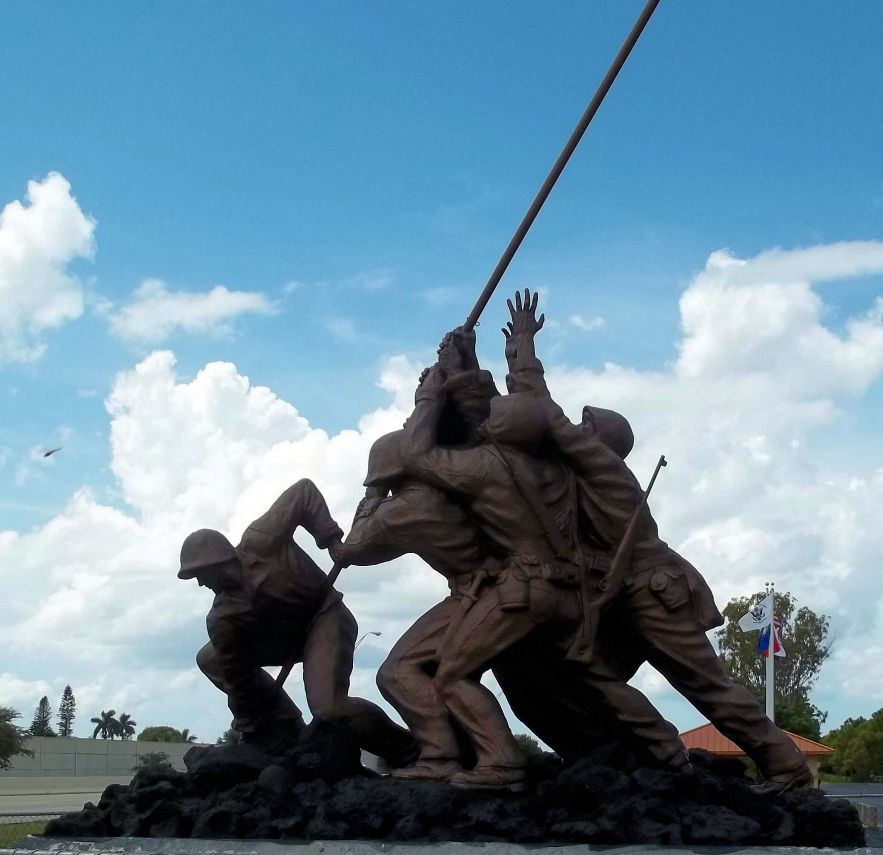
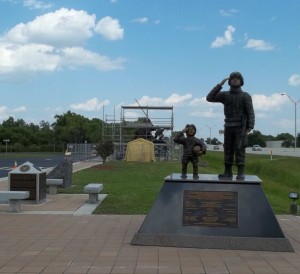
The smaller, 20-foot Cape Coral monument stands proudly on the southern edge of Four Mile Cove Ecological Preserve, within view of traffic motoring by on Veterans Parkway. At 20 feet from base to 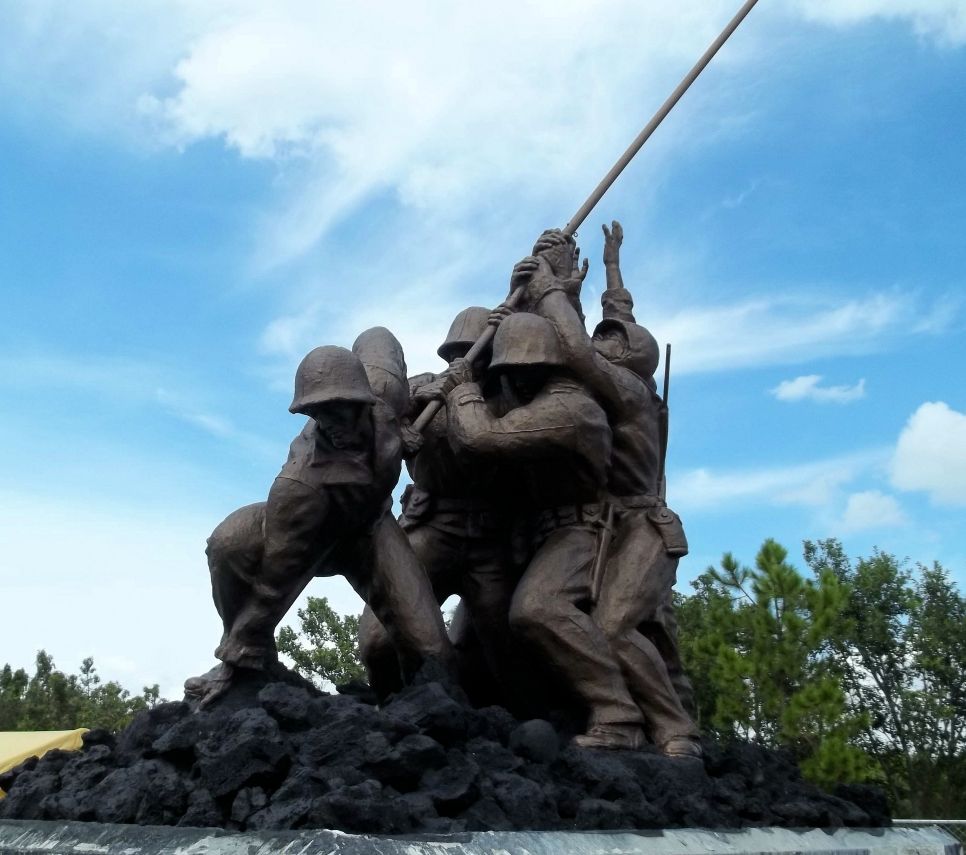 the tip of the steel flagpole, it is roughly one-third the scale of the memorial in Arlington. The sculpture weighs a whopping 67,000 pounds, and was made in 1964 out of concrete poured over a superstructure consisting of rebar and steel.
Depicted are Pfc. Rene A. Gagnon, Pfc. Ira Hayes, Pharmacist Mate Second Class John Bradley, Pfc. Harlon Block, Sergeant Mike Strank and Pfc. Franklin Sously. Block, Strank and Sously died within days of the flag raising in combat on the 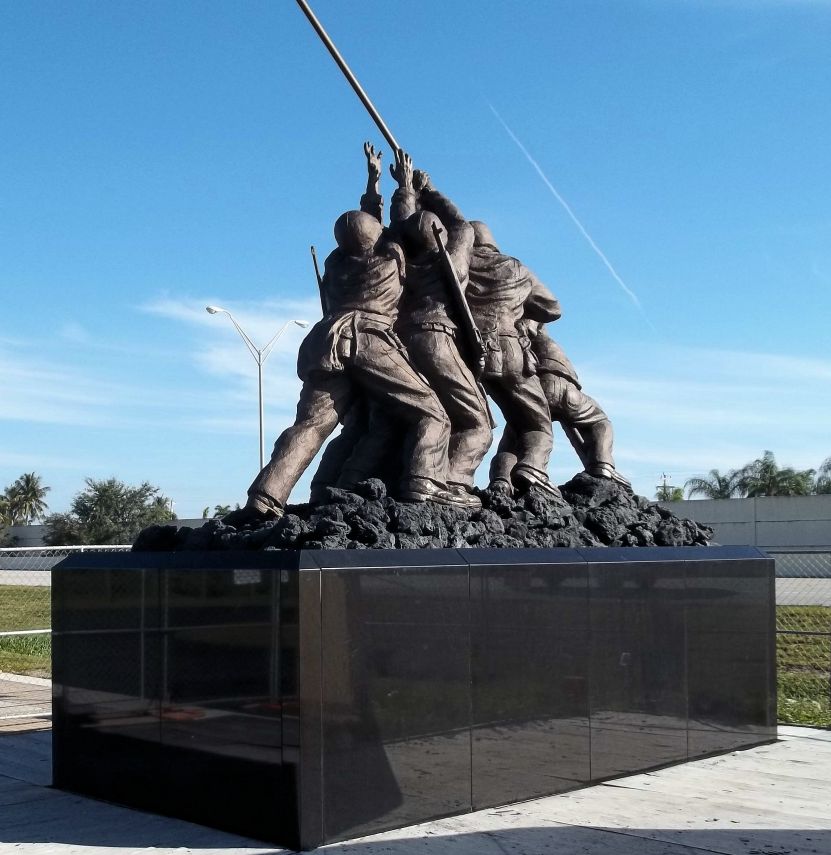 northern end of the island. De Weldon sculpted them using their photographs and measurements. Hayes was also sent to the northern end of the island and was wounded in a mortar attack. But he survived, as did Gagnon and Bradley. All three survivors modeled for de Weldon’s tribute to all Marines who have died in action since 1777.
To create the statue, de Weldon first built the figures’ bone structures with a steel framework. He then put muscles and skin over this framework. The strain of the soldiers’ muscles dramatically show through their uniforms, which were added later.
History of the Cape Coral Iwo Jima Memorial
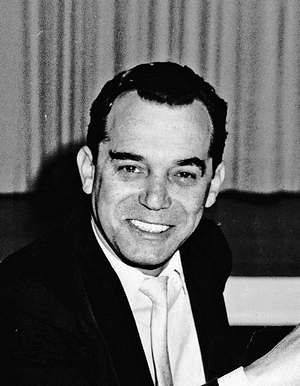 Felix de Weldon made two 20-foot-tall studies in preparation for casting the Arlington memorial. The Cape Coral monument is not one of them. It was made nearly 10 years after installation of the Arlington monument for Gulf American Corporation, which commissioned the piece in 1964 for inclusion in The Rose Garden, Cape Coral’s first tourist attraction.
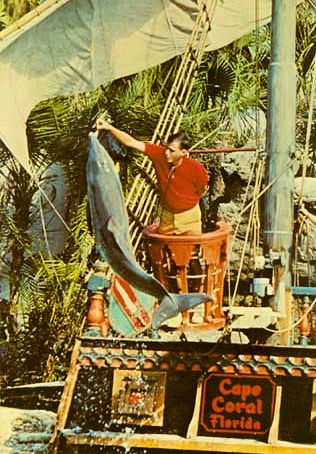 piece of land along the Caloosahatchee River, hired an engineer named Tom Weber, and assembled the greatest sales and marketing team the world had ever seen. They then set about creating Cape Coral, Florida.
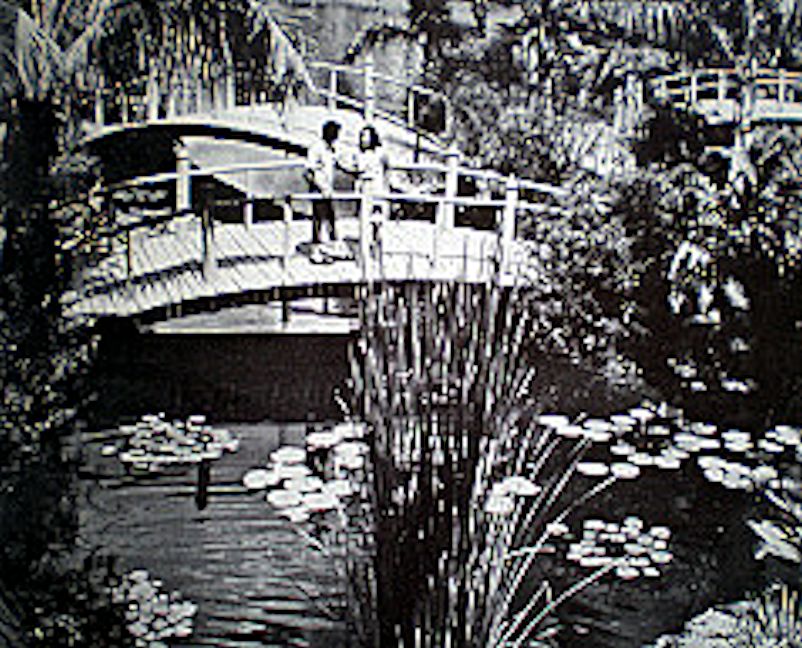
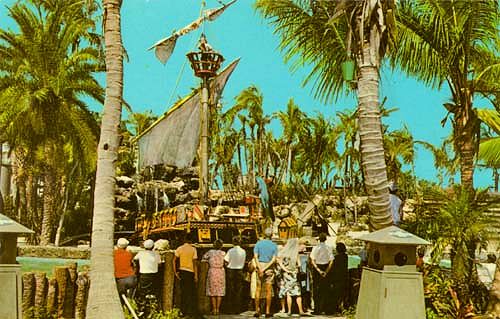 garden filled with lush tropical plants, a reflection pond, a mini Mount Rushmore and, beginning in 1964, the Iwo Jima Memorial. Planted throughout the grounds were more than 40,000 rose bushes, tropical vegetation and thousands of coconut and other palm trees.
 and both the park and the Iwo Jima statue were abandoned. Both quickly fell into disrepair.
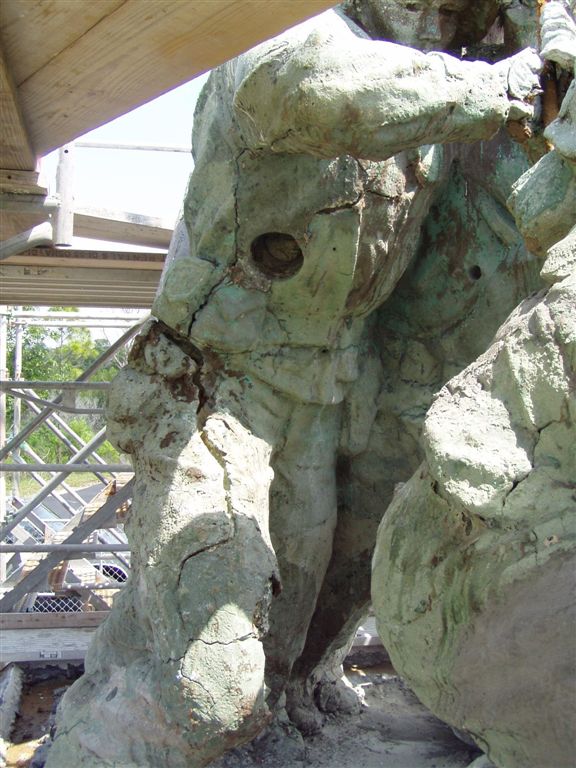
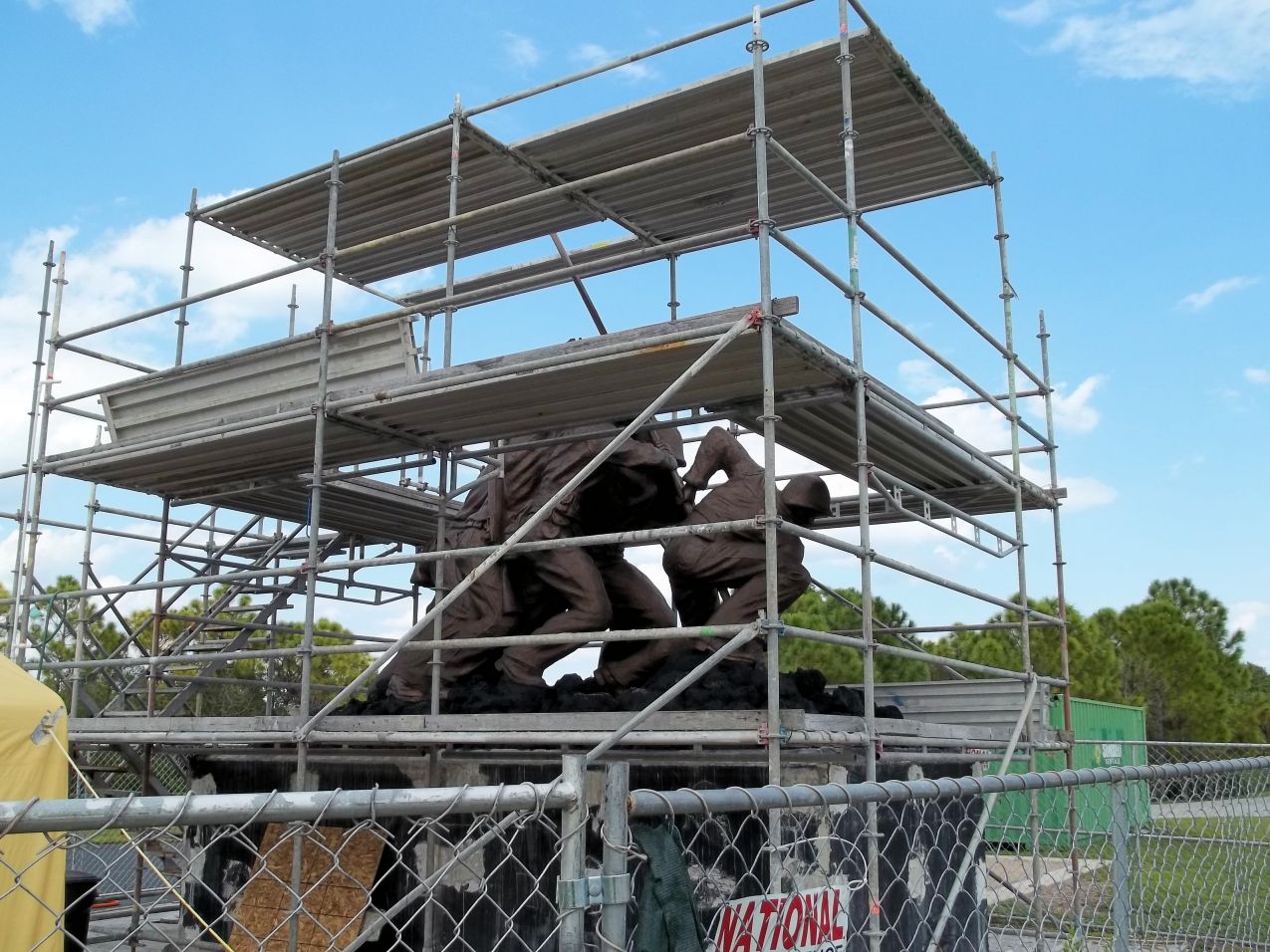 A second restoration of the statue began on March 19, 2011 to repair more than 250 feet of cracks (depicted in second photo to right) that developed in the statue due to expansion and contraction of the concrete as a result of the temperature extremes prevalent in southwest Florida. In addition, the base of the statue was crumbling. (Because of the thickness of the mix, the concrete
 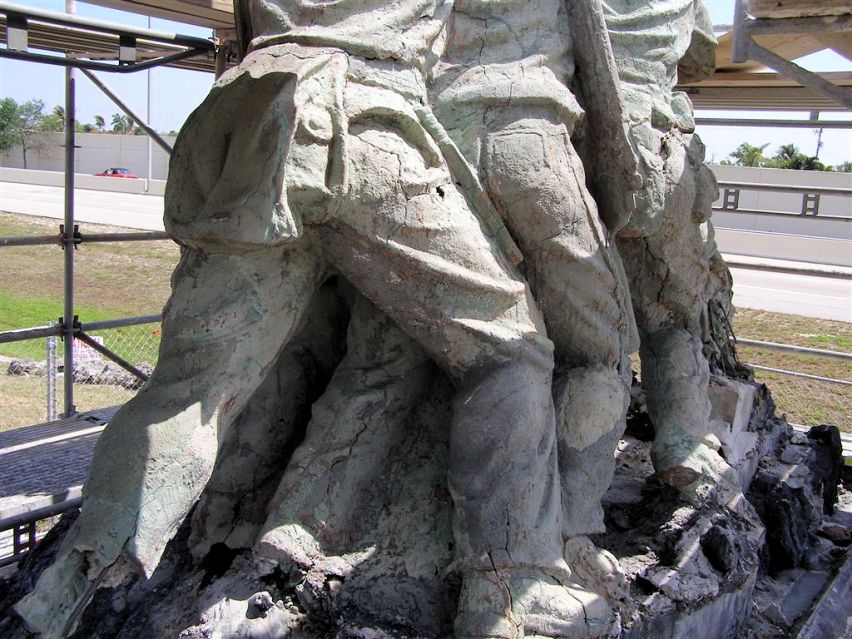 poured into the plaster cast never made it to the bottom of the soldiers’ legs.) Thickness of the plaster mold created even further long-term challenges to the integrity of the structure. But it was the damage suffered by the memorial from Hurricane Charley in 2004 that finally prompted the monument’s restoration.
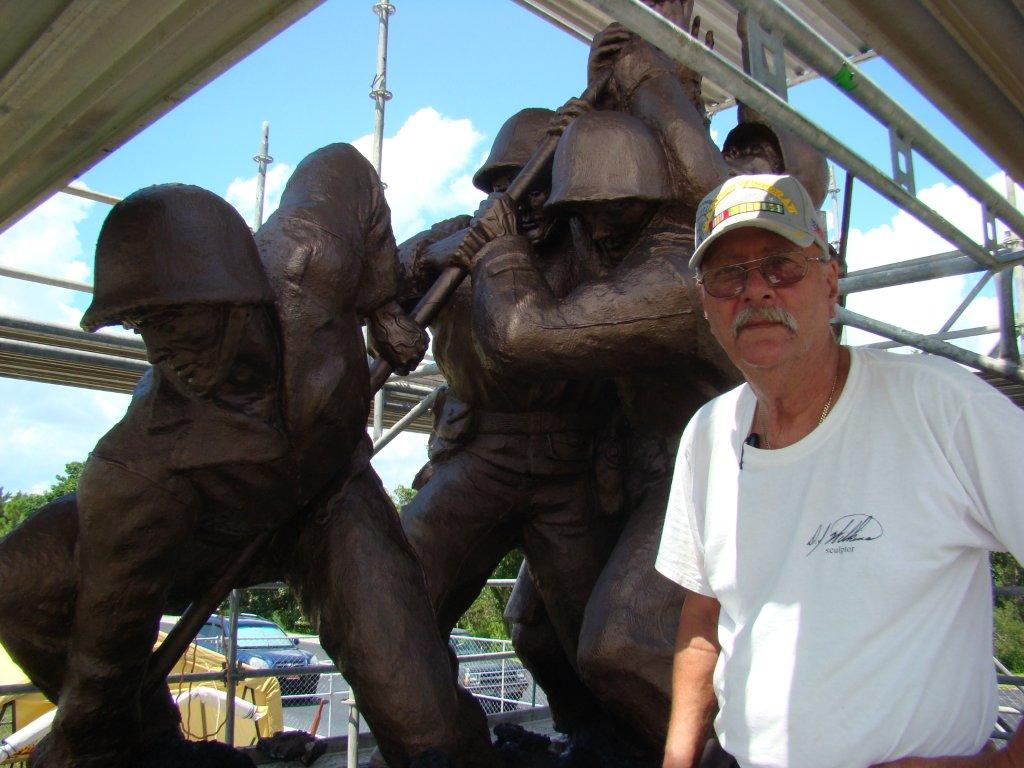
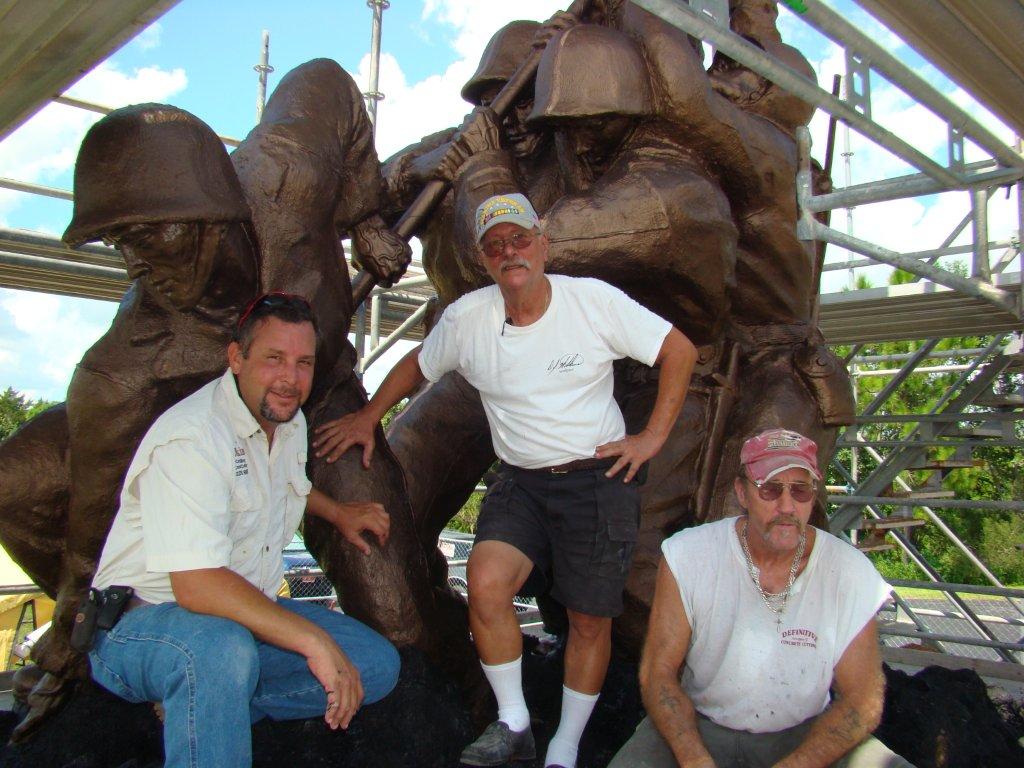 approached Cape Coral’s Parks and Recreation Department. But the department did not have the budget to undertake the work. The Cape Coral Community Foundation stepped in and partnered with Craig T. Fuller Group to raise the needed funds. The Fuller Group hired a concrete restoration specialist from Iowa by the name of Don Meek. Meek in turn engaged North Fort
 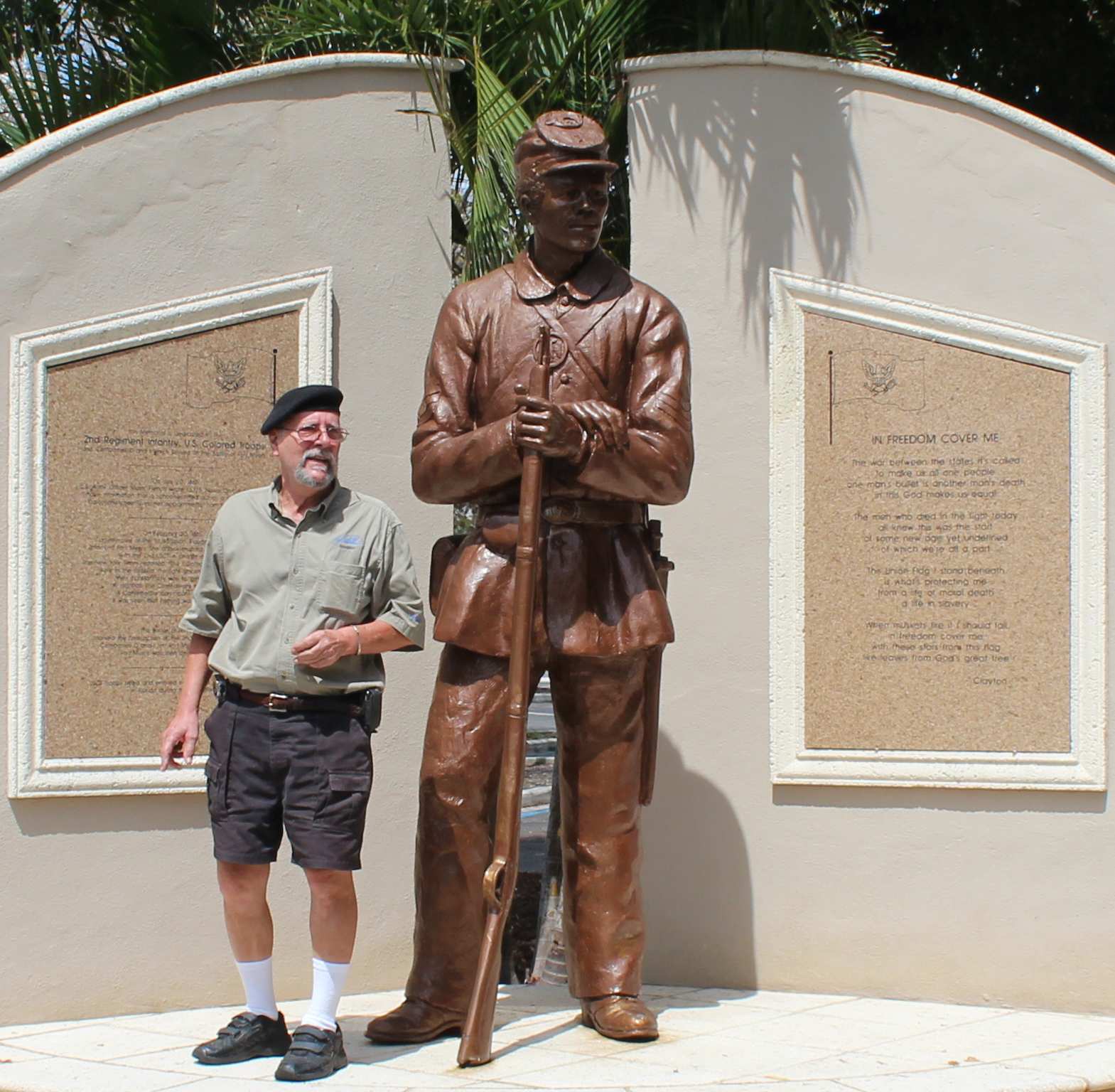 Myers sculptor D.J. Wilkins (shown on left in picture to the right). Dale Shook (far right) and George Colom (center), commandant of the Marine Corps League responsible for care of the memorial, also became part of the team.
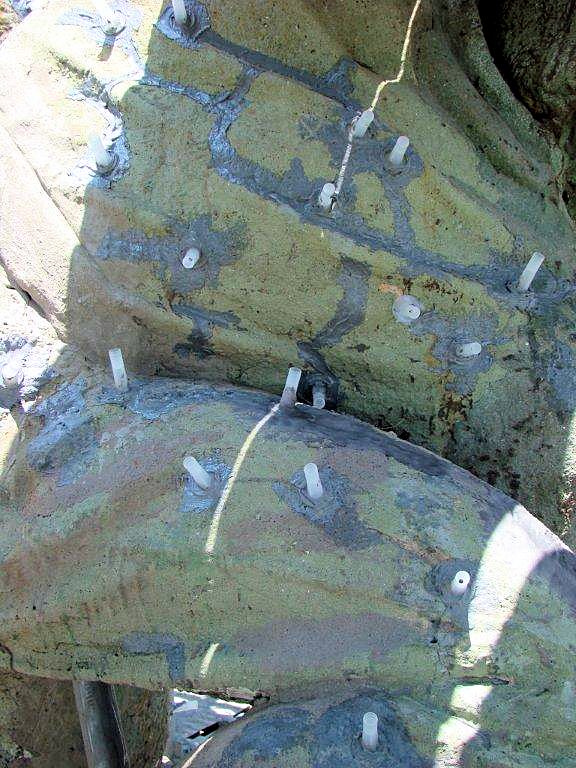 tribute to the 2nd Regiment of the United States Colored Troops and all the black soldiers who died during the Civil War) and the Florida Panther that graces the median on Monroe Street adjoining the Harborside Event Center.
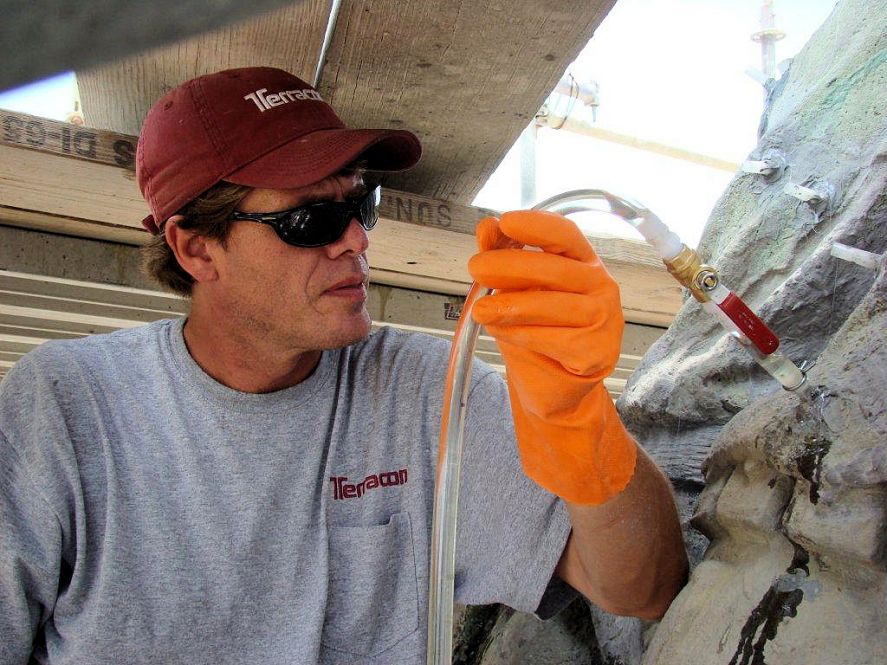 Don Meek recommended that the restoration team use epoxy to bind the cracks and strengthen the structure. Wilkins and his crew were required to drill 255 holes into the figures and base in order to deliver the epoxy to the correct locations. Plastic ports were inserted into the holes, and the epoxy was injected deep into the statue via tubes that resembled IV lines.
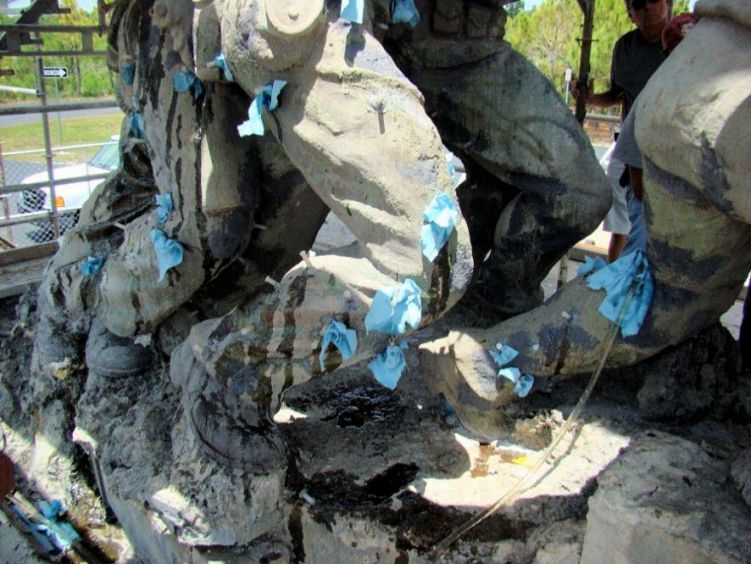 This part of the project consumed two and a half weeks and 15 gallons of epoxy. Said Wilkins afterwards, “Now it is structurally stronger than it has ever been, including when it was created.”
 statue. For guidance, they consulted one of the other replicas, a copy made of cement and plaster over a steel skeleton that is owned by Rodney Hilton Brown, a Manhattan mortgage broker who collects historical artifacts as a hobby.
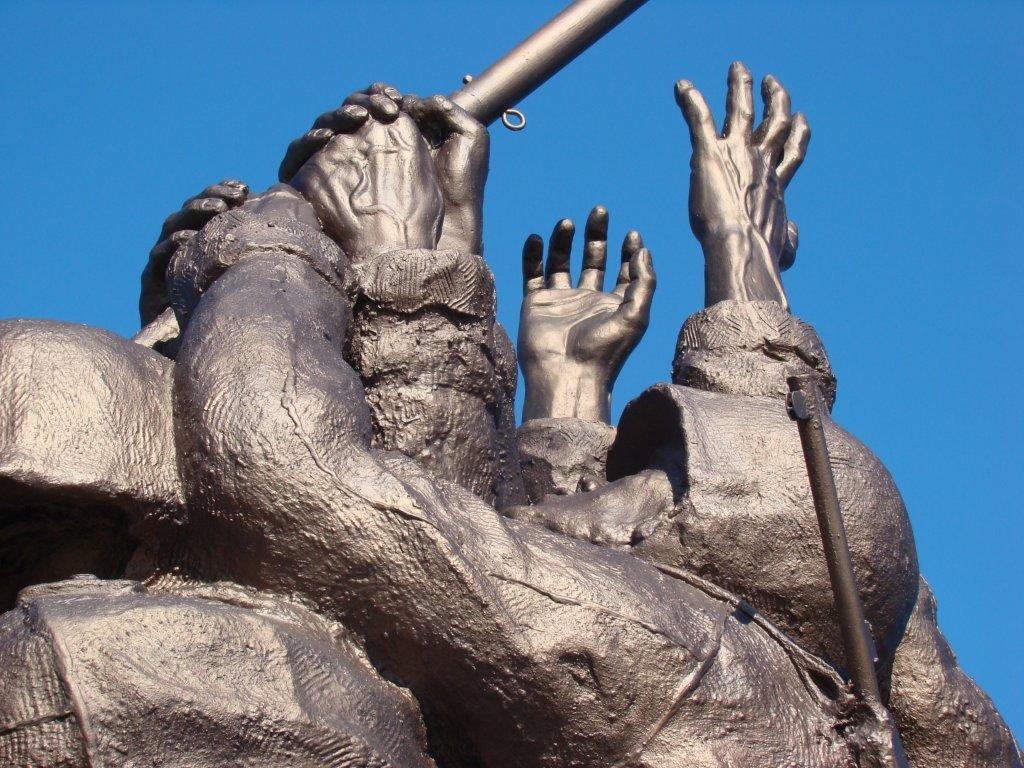 team encountered a number of their own unique challenges. For example, all of the heroes’ hands had been severely damaged over the years by a combination of lightning strikes to the metal flag pole and vibration caused by the fabric flag whipping continually in the stiff gales typical to southwest Florida. Not only did Wilkins find it necessary to re-sculpt the hands, he fit a rubber sheath between them and the flag pole in order to
 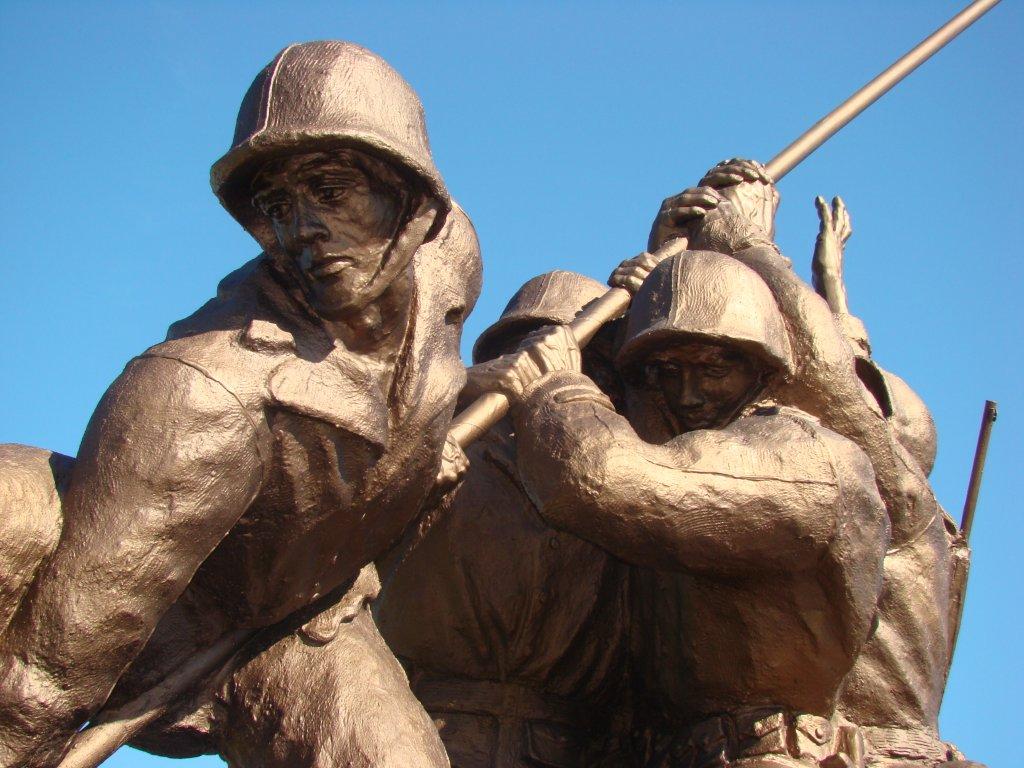 prevent a recurrence of this damage in the future.
![2011-09-13 Iwo Jima Mon. - Walkaround Tour of Painted Figures [2nd Coat] (1)](http://www.artswfl.com/wp-content/uploads/2011/09/2011-09-13-Iwo-Jima-Mon.-Walkaround-Tour-of-Painted-Figures-2nd-Coat-12.jpg) unwanted indentations as they replaced the statue’s exterior skin. (Notice the detail in the photo to the left. The man on the right with the rifle slung over his left shoulder is Pfc. Ira Hayes.)
unwanted indentations as they replaced the statue’s exterior skin. (Notice the detail in the photo to the left. The man on the right with the rifle slung over his left shoulder is Pfc. Ira Hayes.)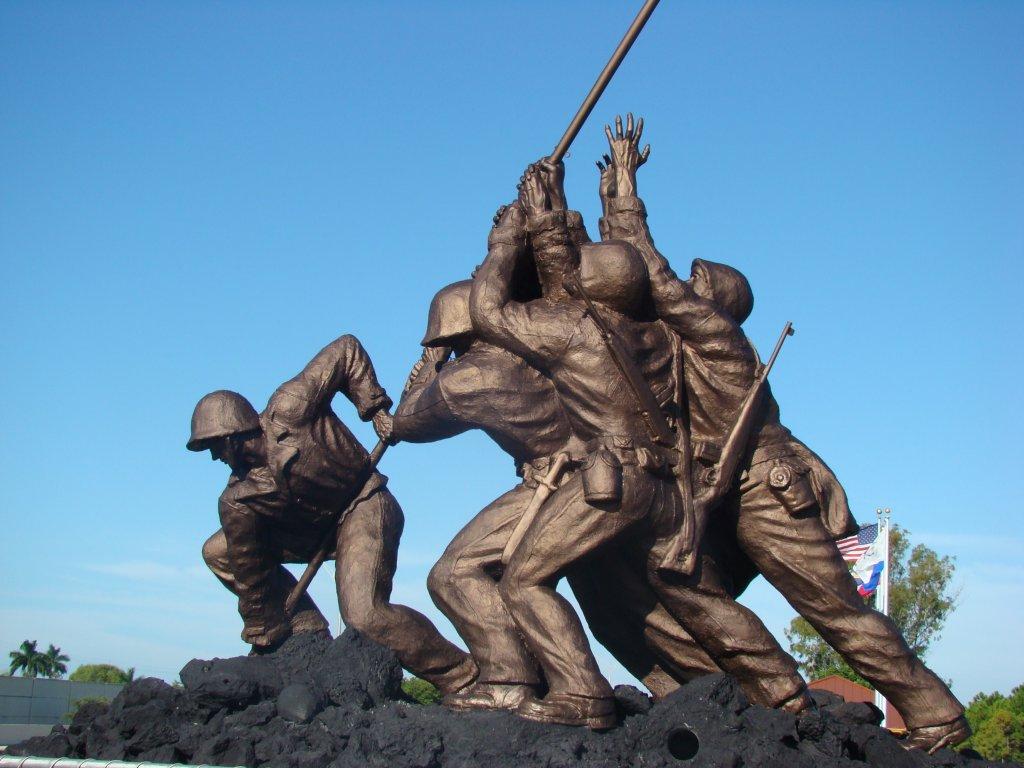 The breadth and scope of the repairs, restoration and repainting required Wilkins and his team to erect two stories of scaffolding around the statue. The scaffolding obscured the statue for nearly six months, but it finally came down on September 19, 2011, revealing a memorial that is as beautiful as it was when it was delivered to the Rose Garden back in 1964 … and more structurally sound than it has ever been.
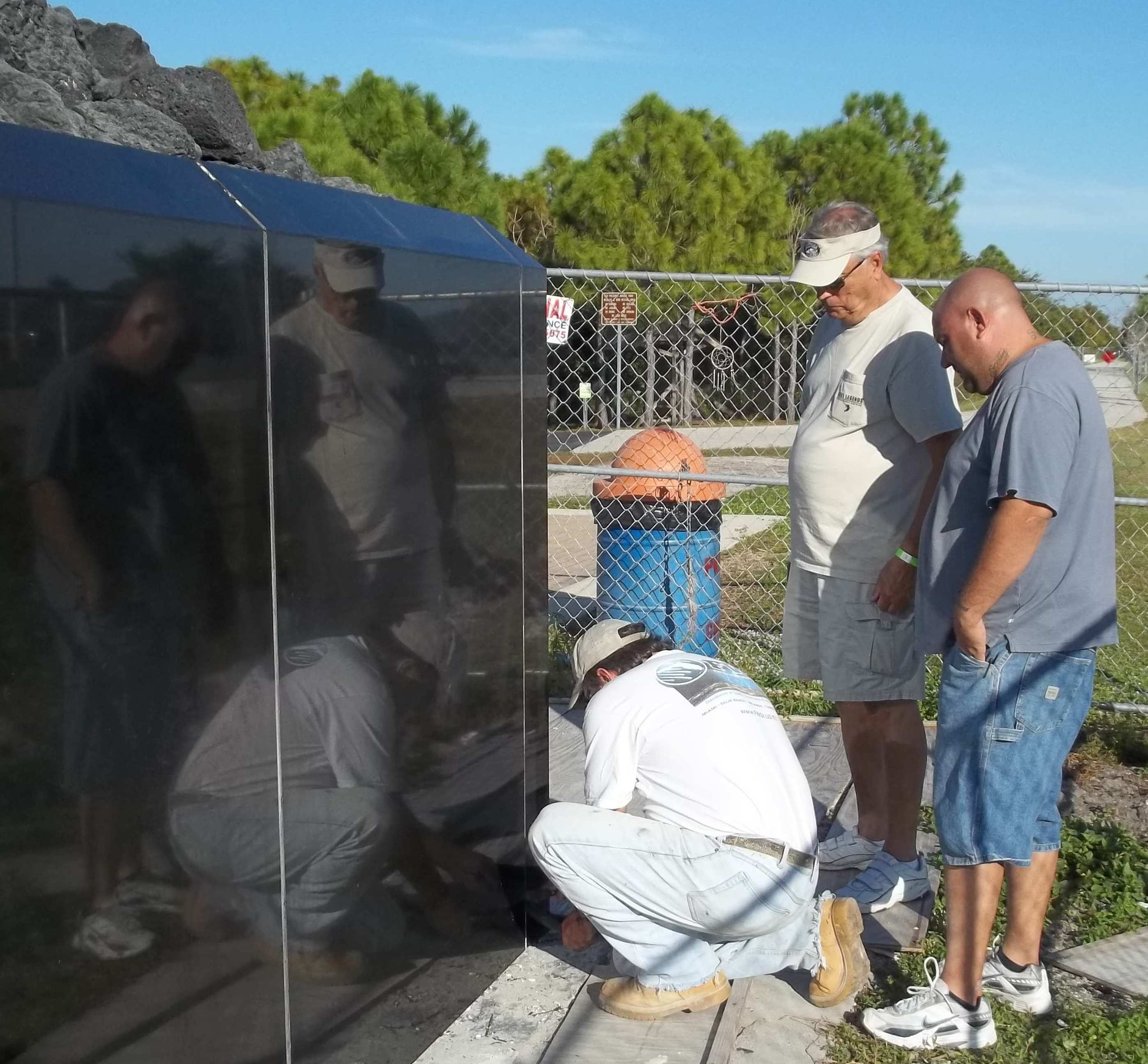 The next part of the restoration involved fitting the base with a new black granite skirt. That task fell to Granite & Marble Family, Inc. of Fort Myers. According to Vice President Scott E. Furlan (depicted far right with Don Meek (center) and Michael Gordon of Gatewood Glass), the granite panels and corner pieces were fabricated in the shop and then attached to each other and the breathable concrete base with a combination of pins, clips, rods and springs which allow the panels
 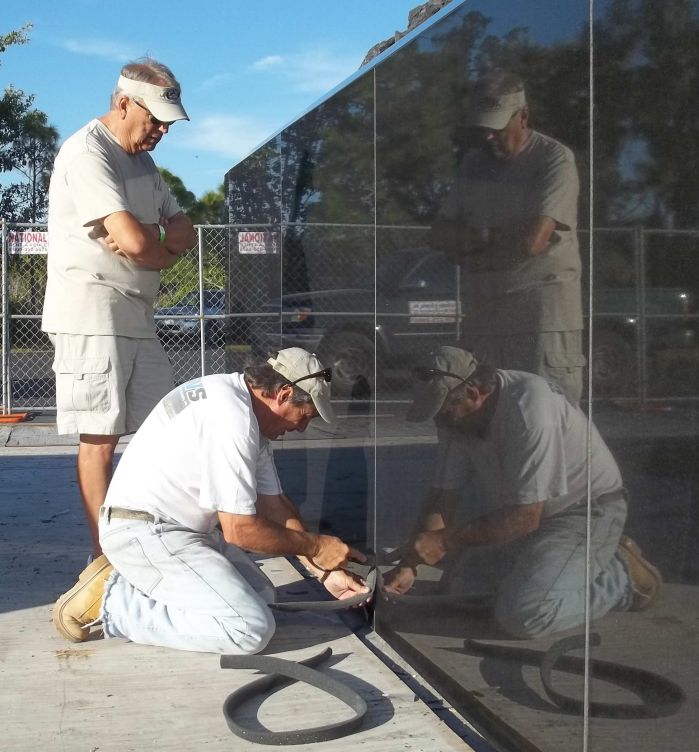 to expand and contract as the temperature changes. The combination is so strong that it prompted Furlan to effuse, “This thing won’t ever come apart. Not even in an earthquake. It’ll be here long after I’m gone.”
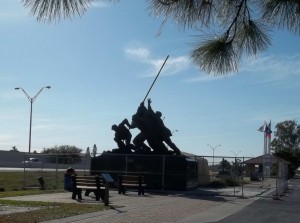 The Iwo Jima Memorial, also known as the U. S. Marine Corps War Memorial, honors the Marines who have died defending the United States since 1775.
- The flag raising depicted by the memorial and related Pulitzer Prize winning photograph was actually the second one to occur on Mount Suribachi on the morning of February 19, 1945.
 A smaller flag was erected on the summit several hours earlier by Platoon Sergeant Ernest “Boots” Thomas of Tallahassee, Florida, but at 54 by 28 inches, the flag was too small to be seen.
 - One of the studies that de Weldon did while preparing the cast for the bronze memorial in Arlington is owned by Manhattan mortgage broker Rodney Hilton Brown. It is presently in Paris Island, after having been on display since
 1995 in a museum maintained aboard the retired aircraft carrier, USS Intrepid (which is docked at Pier 86 on Manhattan’s West Side).
 - Brown obtained his copy directly from de Weldon in exchange for a violin that De Weldon believed to be a Stradivarius, a sword and an undisclosed amount of cash. Brown then had it restored and coated with a bronze-tinged finish.
 The other study was carved from limestone and sent to the Marine Corps base in Quantico, Virginia. According to Fort Myers sculptor D.J. Wilkins, the Quantico replica is so severely damaged as to be beyond repair.
- The iconic photograph of the flag raising upon which De Weldon based the memorial and its replicas is currently missing. It was part of a personal album of photographs from the battle of Iwo Jima that the photographer sold to an Air Force major. The major sold it to Rodney Hilton
 Brown in 1990 for $5,000, and Brown loaned it to the Intrepid Sea, Air & Space Museum, but the photo and seven others were missing when the museum returned the collection to Brown in November of 2006. The missing photos were valued by an appraiser at $175,000.
 - AP photographer Joe Rosenthal died in 2006.
- Felix de Weldon died on June 3, 2003 at the age of 96.
- The 1966 musical comedy The Fat Spy, which
 was filmed entirely in Cape Coral, and had some footage shot in the original Rose Garden. Notable stars in the movie included Jayne Mansfield and Phyllis Diller. The film bombed at the box office and was named in 2004 as one of the 50 worst movies ever made.
  Today, the Rose Garden name lives on in a Southwest Cape Coral neighborhood just north of the site of the original tourist attraction. The subdivision features single-family homes with gulf sailboat and boating access.
- Click here to view at 25-minute You Tube video shot by Blue Marble Films on the history and restoration of the Cape Coral memorial.
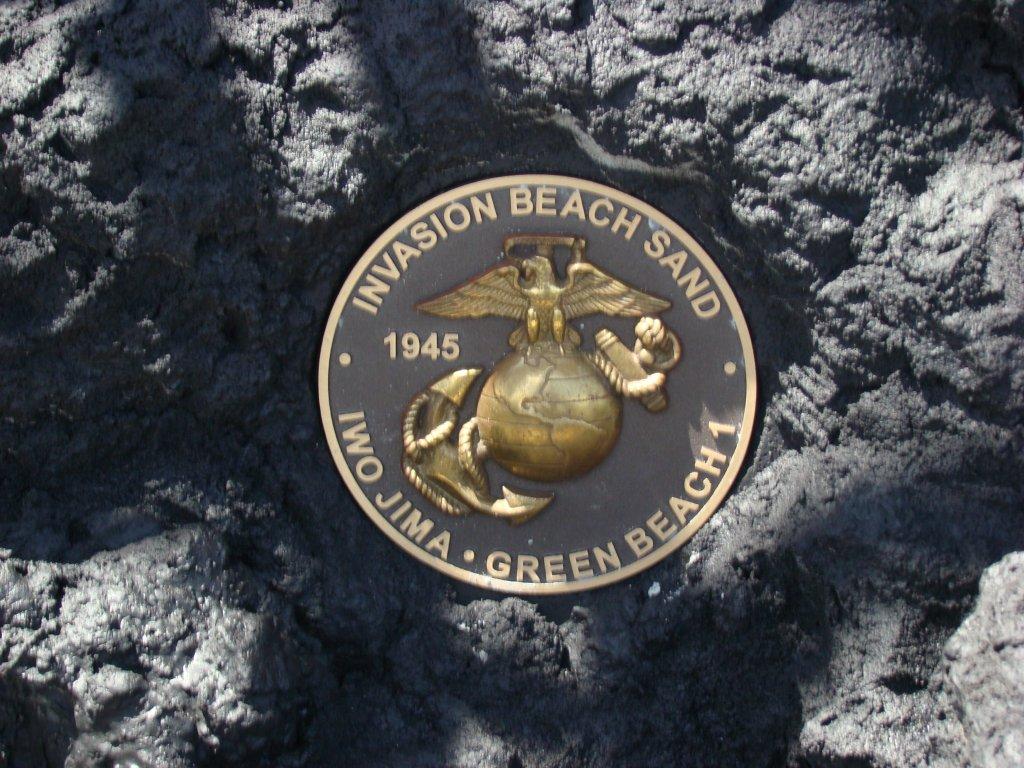
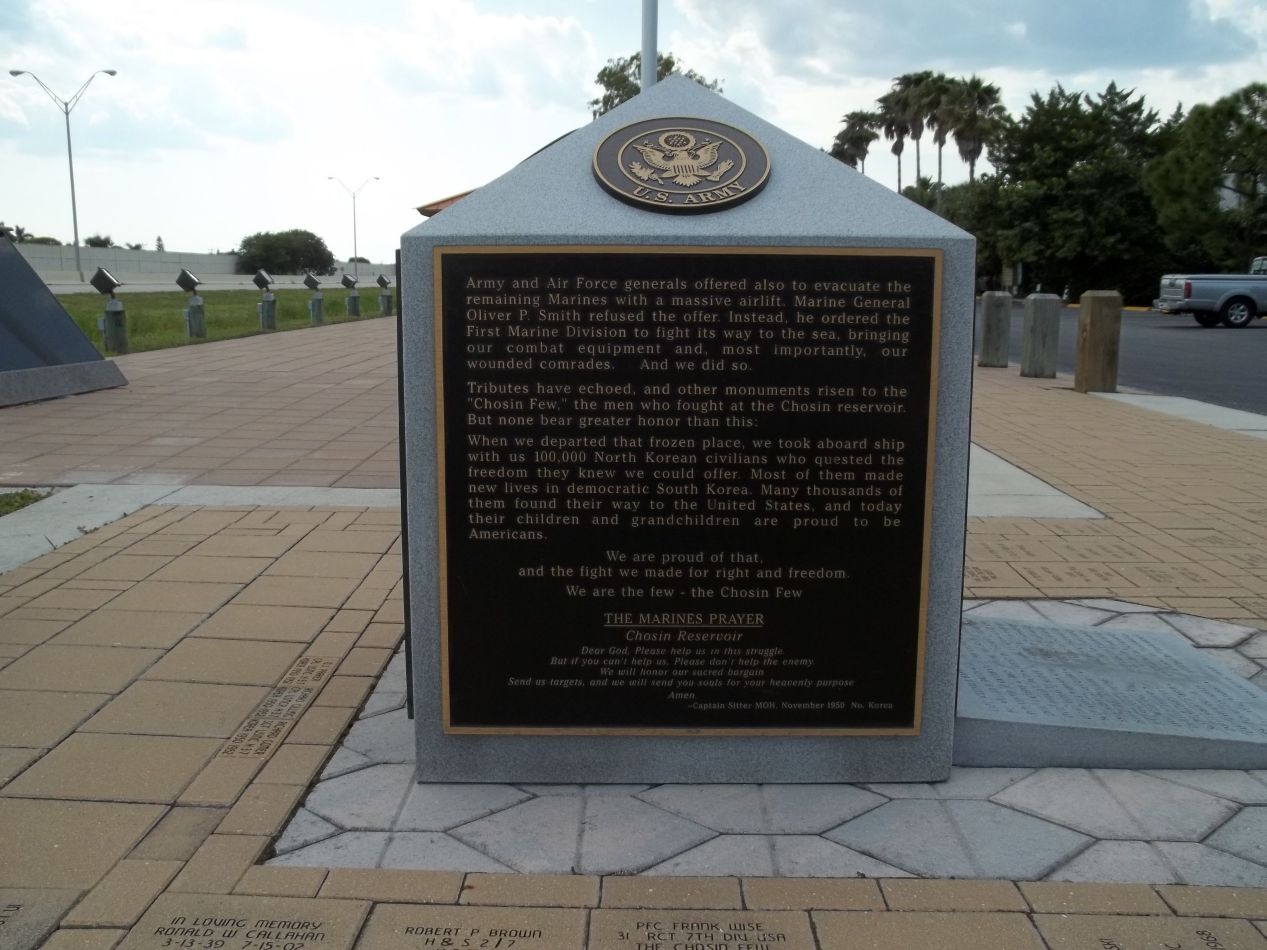
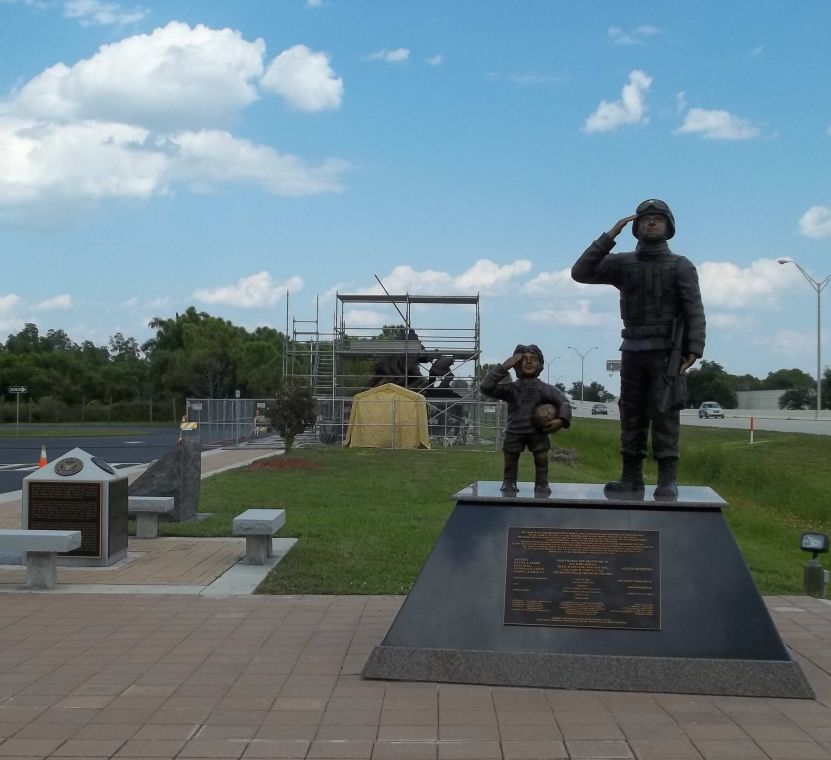
Cape Coral’s Iwo Jima Memorial celebrates 40th anniversary during 70th anniversary of Battle of Iwo Jima (03-22-15)
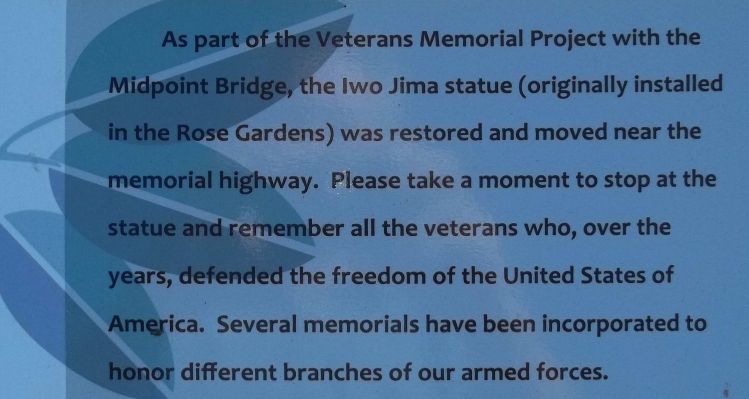
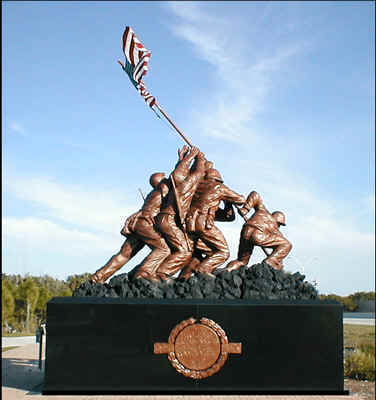 This year marks the 70th anniversary of the Battle of Iwo Jima and the 40th birthday of the Iwo Jima Memorial that greets Midpoint Bridge commuters from its place of honor in Cape Coral’s Four Mile Cove Ecological Preserve.
The Battle of Iwo Jima holds the dubious distinction of being one of the bloodiest in the Pacific Theater during World War II. Between February 19 and March 26, 1945, 6,821 American lives were lost and another 20,000 men were wounded. That represented more than a third of the 70,000 man invasion force and was 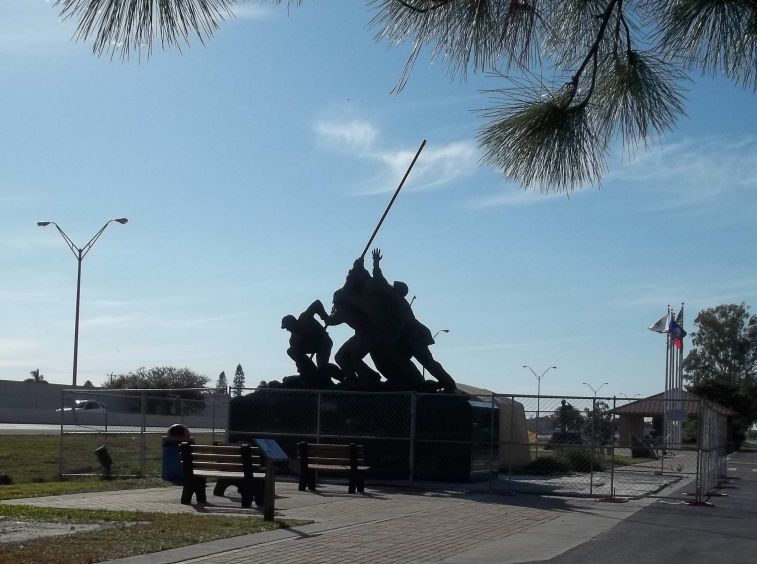 the only battle in the Pacific Theater in which American casualties outnumbered those of the Japanese. Only 216 of the 22,000 Japanese soldiers on the island when the battle began were taken alive. The rest either died in action or committed suicide. But it is the iconic image of five Marines and one Navy hospital corpsman raising the American flag on 560-foot Mount Suribachi
 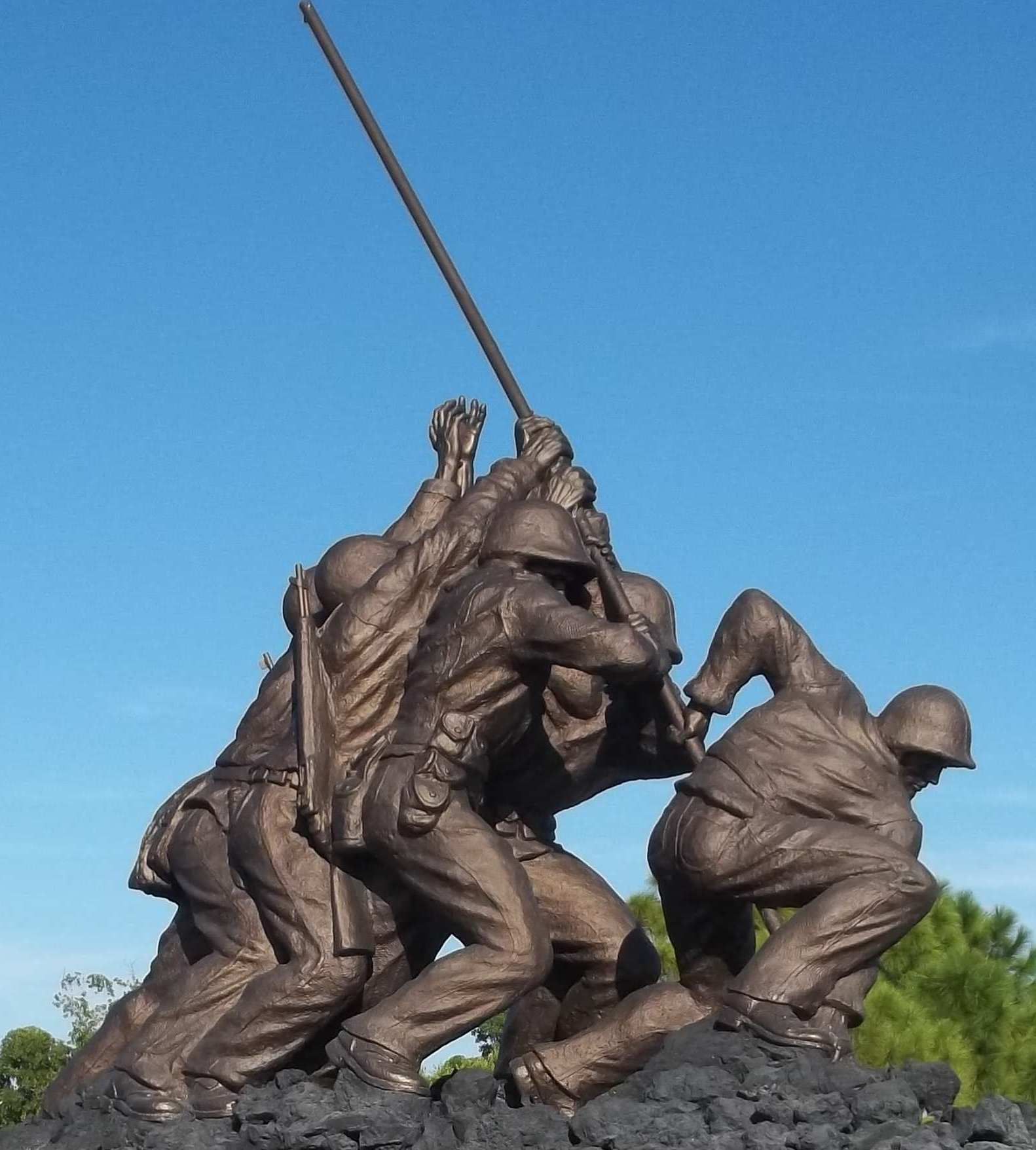 that has come to symbolize the sacrifices made by these men during the five-week campaign.
Ironically, that flag-raising was not the first to take place on Mount Suribachi on that first day of battle. Earlier in the morning, Platoon Sergeant Ernest “Boots” Thomas of Tallahassee, Florida had erected a smaller flag on the summit, but the 54 x 28 inch flag was too small to be seen. And so Pfc. Ira Hayes, Pfc. Rene A. Gagnon, Pharmacist Mate Second Class John Bradley, Pfc. Harlon Block, Sergeant Maike Strank and Pfc. Franklin Sously were dispatched to erect a flag that could be seen by the 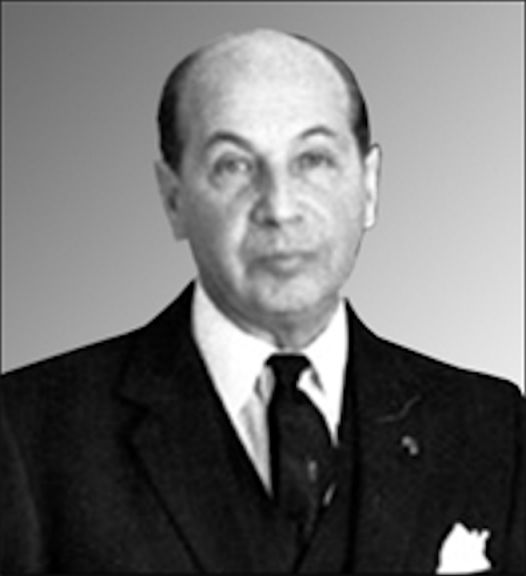 battleships and launches surrounding the island. Associated Press photographer Joe Rosenthal captured the moment on film, and the effort garnered him a Pulitzer Prize for the image. Sadly, Block, Strank and Sously never knew they were to become immortalized in Rosenthal’s photo. The trio died in combat on the northern end of the island within days of the flag-raising.
Back in the States, a sculptor by the name of Felix de Weldon was so inspired by Rosenthal’s photo that he crafted a statuette of the flag-raising, and this maquette eventually earned him a commission to create the 60-foot bronze memorial that today stands outside Arlington National Cemetery on the southern shores of the Potomac River. And ten years later, Julius and Leonard Rosen commissioned de Weldon to make a 20-foot-tall, 67,000-pound concrete replica of the memorial for The Rose Garden, a theme park the flamboyant brothers were building to entice visitors to a community they were building in southwest Florida where people of modest means could live like millionaires. Completed in 1965, the replica became the centerpiece of the Rose Garden’s Garden of Patriots.
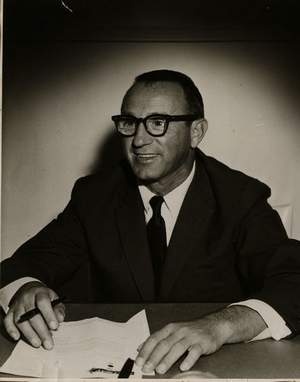 Because of rising costs and declining attendance, The Rose Garden closed in 1970 and both the park and the Iwo Jim Memorial were abandoned. More than a decade later, Cape Coral banker Mike Geml happened upon the memorial, which had been badly damaged by vandalism and years of neglect. A Marine himself, he made it a personal mission to restore the work, moving the statue to the North First Bank on Del Prado Boulevard near Viscaya Parkway. He spent the next year raising funds for the restoration project and brought de Weldon to Cape Coral for an assessment of what needed to be done. The sculptor is said to have broke down and cried when he saw the
  deplorable condition that the piece was in. He was so shocked by what he found that he sent his son and another of his people to Cape Coral to personally handle the work.
The memorial remained on the bank’s property until 1998, when it was relocated to Eco Park. During this time, the sculpture required additional repairs, and this time Geml brought in North Fort Myers sculptor Don “D.J.” Wilkins. It was Wilkins who also handled an even more intensive restoration project in 2011 that was necessitated by more than 250 cracks that developed in the statue due to the concrete’s expansion and contraction in the temperature extremes and intense sunlight prevalent in Southwest Florida. The Memorial was re-dedicated on February 25,2012, the first Saturday following the 67th anniversary of the actual flag raising on February 19, 1945, and thanks in large measure to the work of Wilkins and his restoration team, the memorial celebrated its 40th anniversary earlier this year.
September 27, 2011; revised November 11, 2021.
Leave a Reply

About the Author
 Tom Hall is both an amateur artist and aspiring novelist who writes art quest thrillers. He is in the final stages of completing his debut novel titled "Art Detective," a story that fictionalizes the discovery of the fabled billion-dollar Impressionist collection of Parisian art dealer Josse Bernheim-Jeune, thought by many to have perished during World War II when the collection's hiding place, Castle de Rastignac in southern France, was destroyed by the Wehrmacht in reprisal for attacks made by members of the Resistance operating in the area. A former tax attorney, Tom holds a bachelor's degree as well as both a juris doctorate and masters of laws in taxation from the University of Florida. Tom lives in Estero, Florida with his fiancee, Connie, and their four cats.
I visited this memorial several years ago and was very moved by the experience.Thank you so very much to all the dedicated people involved in the magnificent restoration of this national treasure.
Most of all thank you for preserving the memory of all those who served and preserved freedom for all of us in WW2.
We can never repay their sacrifice but we can and must remember them for what they gave to all of us.
As a veteran myself, I get chills everytime I cross the bridge and see this memorial. It is absolutely beautiful and I am so proud to gave it in our community.